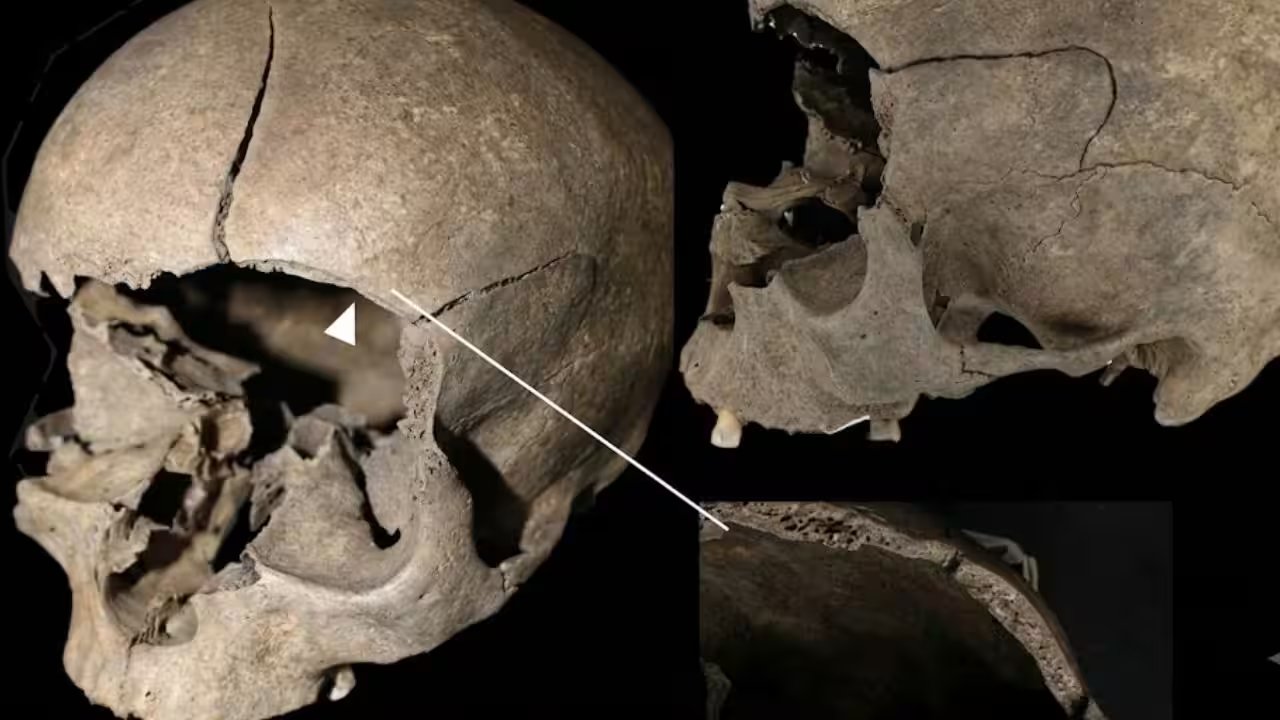
Researchers examining 192 skeletal remains from 197 depositional contexts across southern and central Scandinavia identified 19 traumatic injuries in 12 individuals, demonstrating violence before death.
Injuries included sharp‑force and blunt‑force trauma, fractures, and multiple head wounds, with eight or nine cases pointing to deliberate violence.
The bones were recovered from domestic settings—beneath house floors, in pits, wells, and postholes—rather than conventional cemeteries, indicating atypical burial practices.
A 2‑ to 4‑year‑old child’s fractured frontal bone was later buried between two floor layers in a Danish longhouse, while similar injuries were found at Sweden’s Uppåkra, a major ritual centre.
The study’s authors suggest that repeated injuries, physiological stress and irregular burial treatment point to social vulnerability and structural violence in Iron and Viking Age societies.