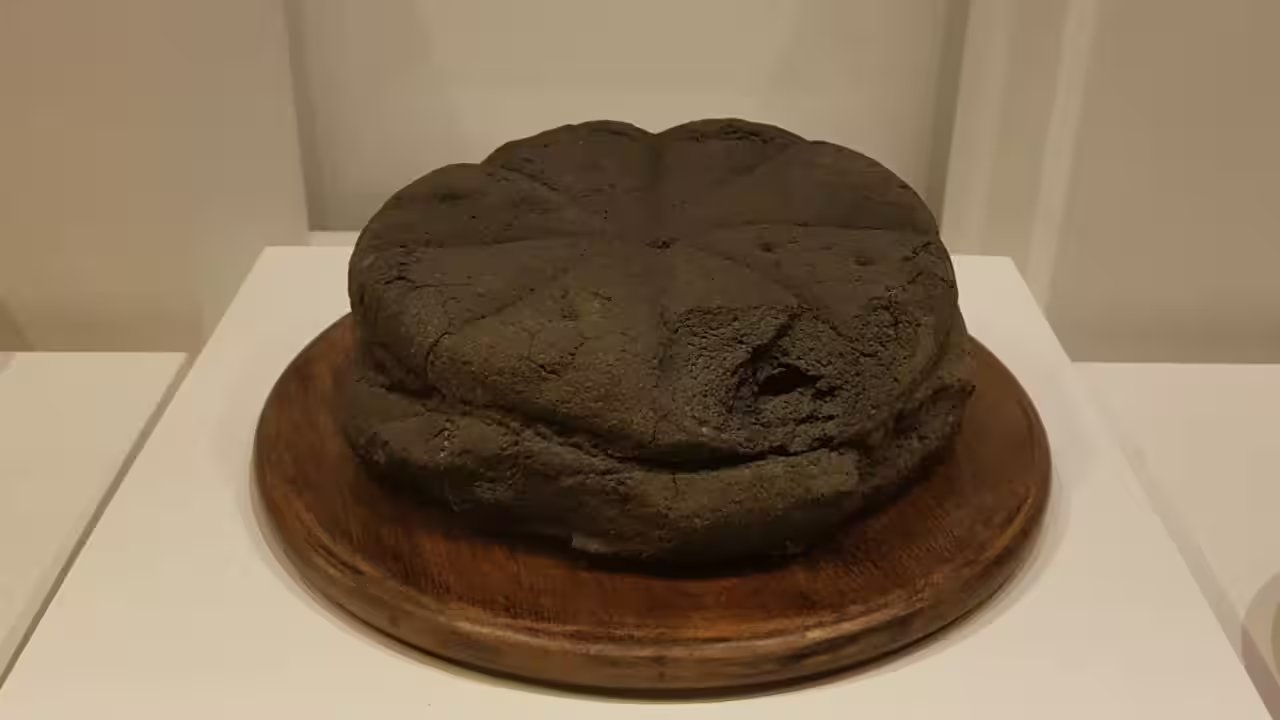
Archaeologists discovered a carbonised loaf of bread in Herculaneum in 1930, buried under volcanic ash from Vesuvius's 79 AD eruption. Rapid burial preserved the dough, offering a rare, tangible glimpse into ancient Roman cuisine.
The loaf bears eight straight cuts, the hallmark of panis quadratus, a design that enabled division into portions. Stamps with the letters "VM" impressed into the dough likely identified ownership in shared public ovens, revealing household economies and baking customs.
In 2013 the British Museum showcased the loaf during a Pompeii‑Herculaneum exhibition. Italian chef Giorgio Locatelli recreated the bread in London, using wholemeal, spelt, buckwheat flours, a sourdough starter called biga acida, and baking it at 200 °C for 30–45 minutes. The museum released the recipe and a preparation video in July 2020, inviting modern bakers to experiment.
Excavations also uncovered small flatbreads with geometric motifs, possibly sold in thermopolia. Their circular shape and hollow centres suggest quick consumption, reflecting everyday food culture in Herculaneum.
The recreated loaf has sparked interest among culinary historians and bakers, who now experiment with ancient techniques to revive Roman diets. Visitors to the 2013 exhibition reported tasting a tangible link to the past, turning a relic into a shared culinary experience.