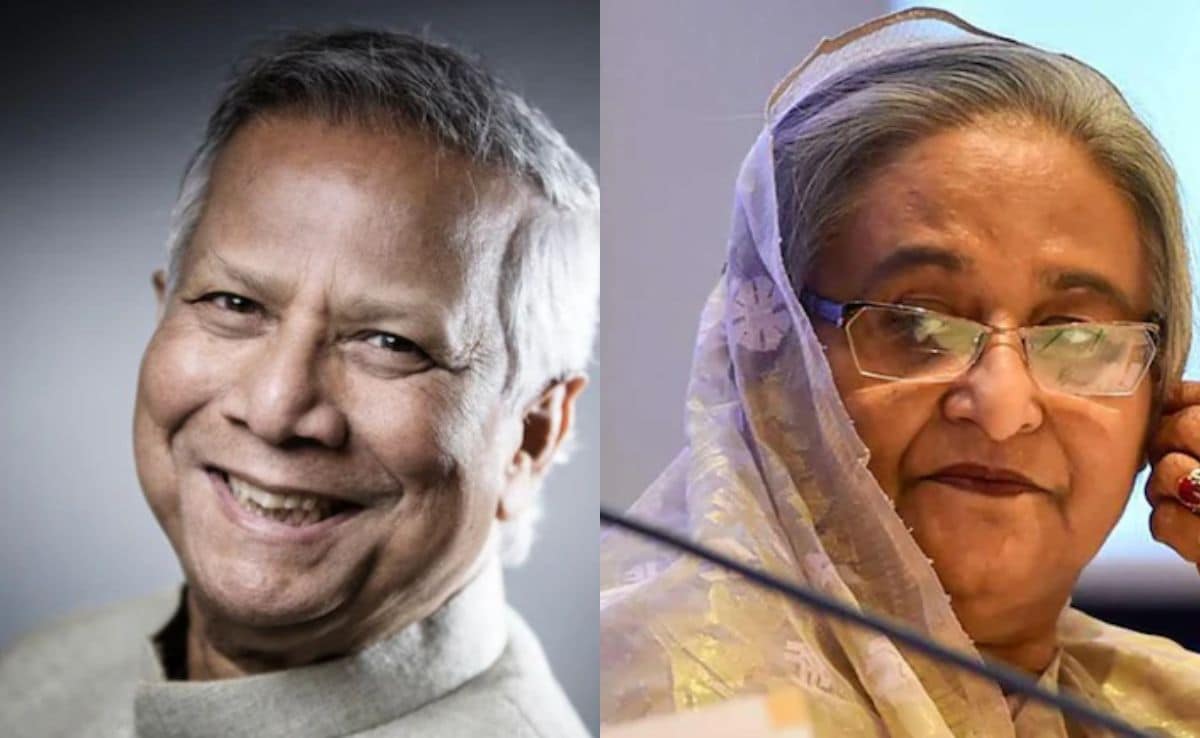
Shafiqul Alam, former press secretary to Muhammad Yunus, has alleged that the collapse of Sheikh Hasina’s government was not a spontaneous popular uprising but a coordinated operation planned two days in advance. In a Facebook post, Alam claimed that student leaders contacted the Nobel laureate on August 3, 2024, seeking his leadership for an interim government, well before Hasina fled Dhaka on August 5. The claim paints a stark picture of behind-the-scenes maneuvering that preceded one of Bangladesh’s most volatile political transitions.
Alam identified Qadaruddin Shishir, then editor of Agence France-Presse (AFP) Dhaka’s fact-check team, as the “trusted bridge-builder” who facilitated these high-stakes talks. According to Alam, Shishir approached the 2006 Nobel Peace Prize winner in “complete secrecy,” managing the initial contacts while Hasina’s security apparatus remained unaware. “Only a select few trusted individuals knew what was happening,” Alam wrote, describing Shishir’s role in ensuring the plot stayed hidden from the regime’s intelligence network.
The aide’s account suggests the regime’s failure was not just a loss of public support but an intelligence blind spot. Alam noted that Hasina’s security machine, notorious for mass killings and abductions, caught “no whisper” of the impending change. He warned that had the regime discovered the plot, Shishir and the AFP team would likely have ended up in Aynaghar, the infamous secret prison. Alam also claimed Shishir began gathering video evidence of regime violence during this period, praising the journalist’s “cool and composure” under pressure.
The allegations land amid ongoing tensions between the Yunus administration and Hasina’s camp. After assuming office on August 8, 2024, the interim government tried Hasina in absentia in 2025, sentencing her to death and disbanning her Awami League party. Hasina has countered with accusations of political repression and selective justice under the new leadership. The dispute has spilled into the international sphere, evidenced by recent incidents at New York’s JFK Airport where purported Awami League supporters heckled Yunus, shouting accusations of terrorism and murder as he left the terminal.
The Yunus administration faces continued scrutiny over its handling of political dissent and the legal proceedings against former officials. As the interim government transitions to a permanent electoral setup, the credibility of its origins remains a flashpoint. The next major step in this political saga hinges on the upcoming general elections, where the legitimacy of the current power structure will be tested on the ballot.