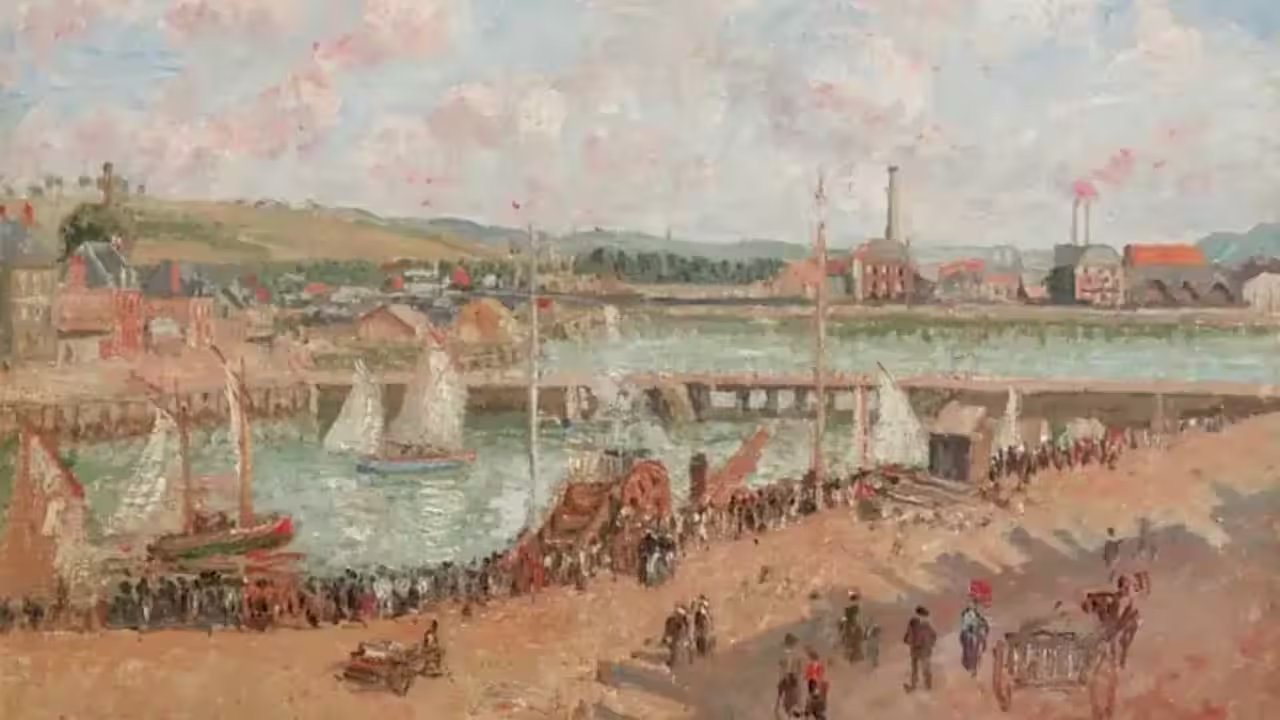
Seven heirs of Salomon Flavian, a Parisian Jewish banker whose collection was seized by the Nazis in 1941, have filed a motion to overturn the 2024 sale of a Camille Pissarro painting. The family told a Paris court on September 18 that only two relatives, Gilles and Nicolas Flavian, signed the settlement allowing Sotheby’s to auction the work. They claim the other descendants were never consulted.
The dispute centers on 'Darse de pêche et bassin Duquesne, Dieppe, après-midi ensoleillée', a 1902 scene of a French port. Sotheby’s sold the piece in London on June 25, 2024, for £1.2 million. That price landed below the £1.5 million to £2.5 million estimate. The auction house argues the sale was legitimate, pointing to a settlement disclosed in the catalogue. They contend the work was not looted but sold by dealer Paul Rosenberg to British collector Edward Le Bas in 1938, before the occupation.
The heirs reject that timeline. Their lawyer, Corinne Hershkovitch, argues that the painting’s absence from Nazi inventory lists does not prove it was not stolen. She points to the work’s inclusion in France’s Répertoire des biens spoliés, a postwar register of looted property. The family also contests the financial arrangement, noting that Mondex Corporation, a Toronto-based recovery firm, informed them in a letter that an 8% share of the net proceeds had been accepted on their behalf without their consent.
Sotheby’s disputes the court’s jurisdiction and the looting claim. A statement reported by The Jewish Chronicle noted that the settlement between the consignor and Mondex was fully disclosed. The provenance research commissioned by the sellers, led by scholar Mary Kate Cleary, found no reference to the painting in the Einsatzstab Reichsleiter Rosenberg confiscation lists. The heirs argue these records are incomplete and that family archives could clarify the true history.
The Paris court is expected to deliver its ruling on November 5, 2026. A decision in favor of the heirs could annul the sale and force a renegotiation of the proceeds. For now, the painting’s status remains legally frozen, a fragment of a family’s history caught between auction records and wartime trauma.